Communicate, sell, and lead more effectively in three steps. With the STRUCTOGRAM® training system, you’ll quickly and easily learn to communicate on a wavelength your counterpart can understand. The result is lasting customer loyalty and greater success in sales and leadership.
Learn more about our products here:
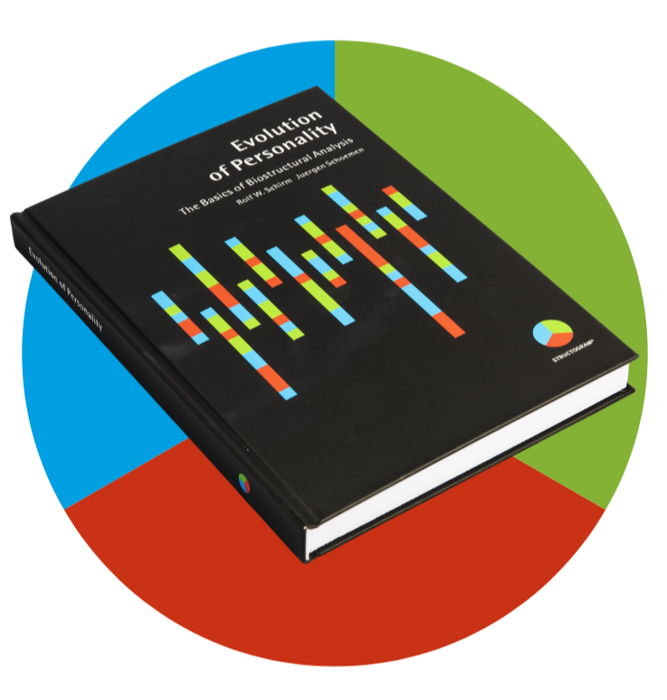
The Basics of Biostructural Analysis
This introductory volume explains the scientific basis of biostructure analysis. This reference book does not contain any analysis questions or a Structogram disc! Biostructure analyses are offered exclusively in seminars led by specially trained and licensed trainers.
Detailed information on the scientific foundations and background of biostructure analysis can be found in this book:
Evolution of Personality – The Fundamentals of Biostructure Analysis,
16th, revised and expanded edition, 2017,
200 pages, hardcover, price CHF 36.00 (plus shipping and VAT)
ISBN 978-3-9522594-4-3
There is no magic formula for success, because every person is unique!
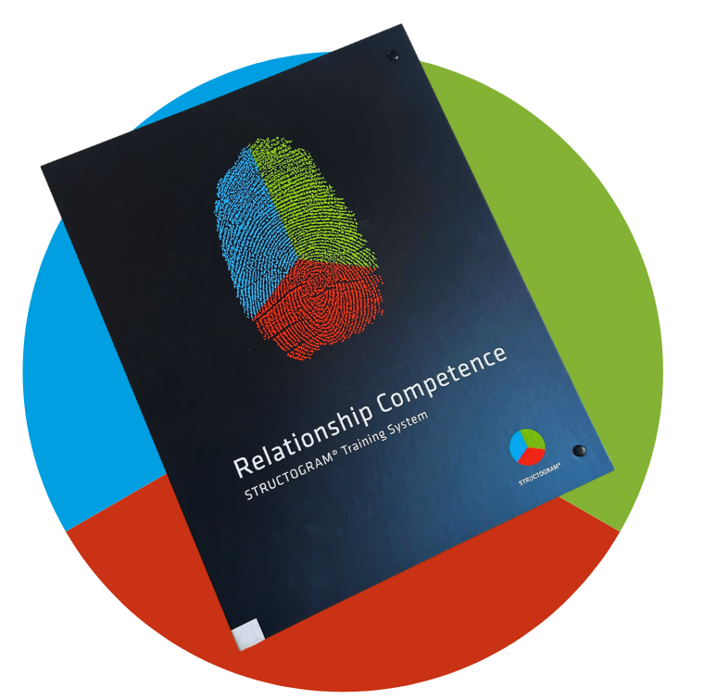
STRUCTOGRAM® Training System
The book Relationship Competence includes all three parts from Volumes 1 through 3.
This teaching resource is particularly well-suited for understanding Structogram in its entirety at a glance. Participants gain a much better understanding of the value and importance of Part 2, “The Key to Understanding Others,” and Part 3, “The Key to Practical Application.”
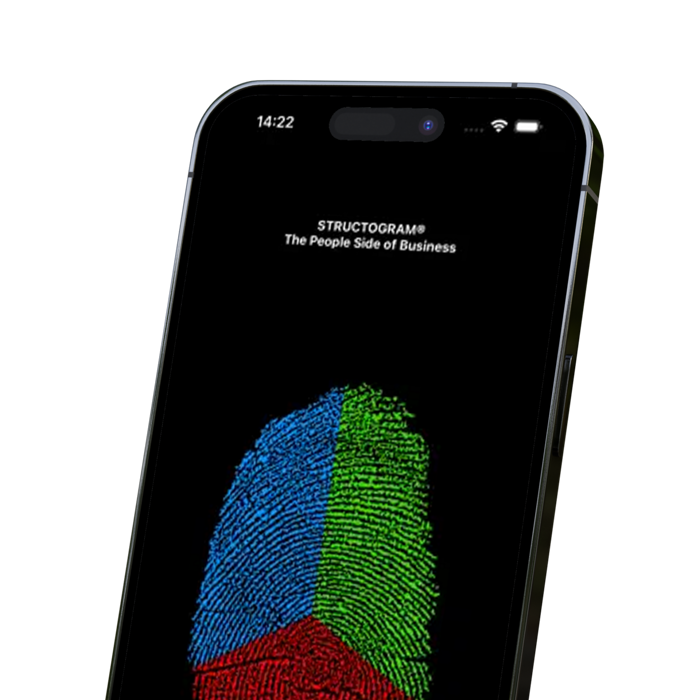
STRUCTOGRAM® Online Tool
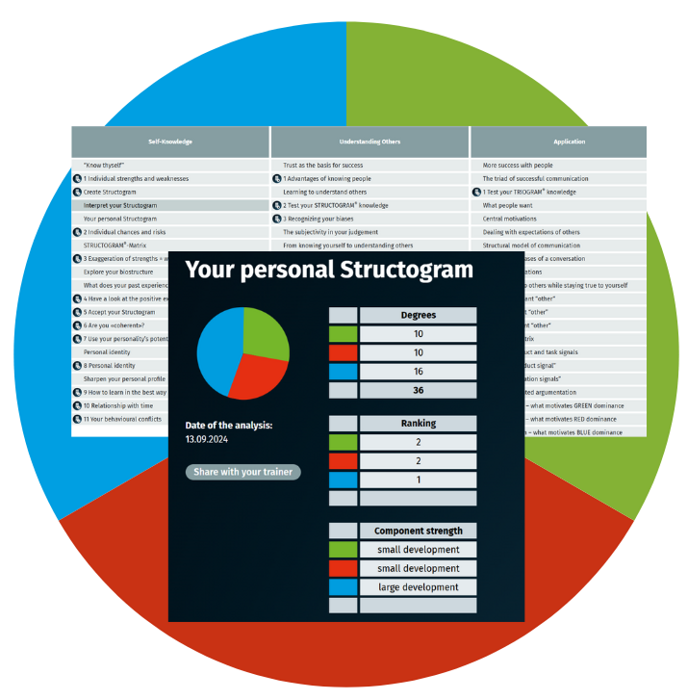
The Structogram online tool is a digital application designed to make it easy to use the Structogram model. The tool allows users to create, save, and evaluate personal biostructure analyses digitally. Users receive a graphical representation of their individual biostructure.
The digital platform includes all three parts from Volumes 1 through 3. Users can individually select which parts they wish to complete. The tool can be used anywhere and at any time and is particularly well-suited for digital or hybrid training sessions.
The online tool is also available in 16 languages.
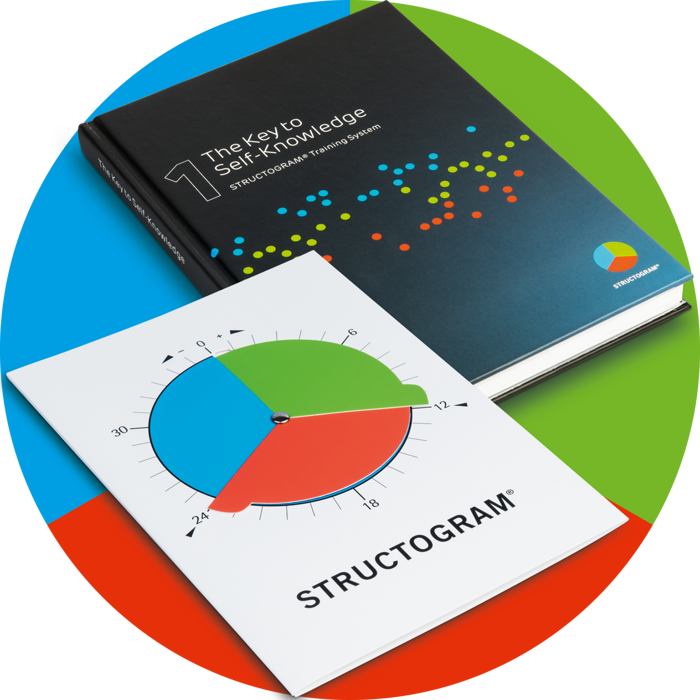
STRUCTOGRAM® Training System 1
Successful people have their own unique style. They use methods and techniques that suit them perfectly. It is not pre-packaged “recipes for success,” but rather an authentic personality—with all its rough edges—that is the key factor in success. The Structogram maps out one’s personality, including all its opportunities and risks. It does so without judgment, because every biostructure has its advantages.
In the first training step, participants get to know each other in a new way. They understand the reasons behind their success and can avoid failures. Behaving and developing in accordance with one’s own nature builds trust and saves energy.
Understanding one’s own biostructure enables the development of realistic goals, the creation of promising strategies, and the application of appropriate sales techniques and leadership methods.
STRUCTOGRAM® Training System 2
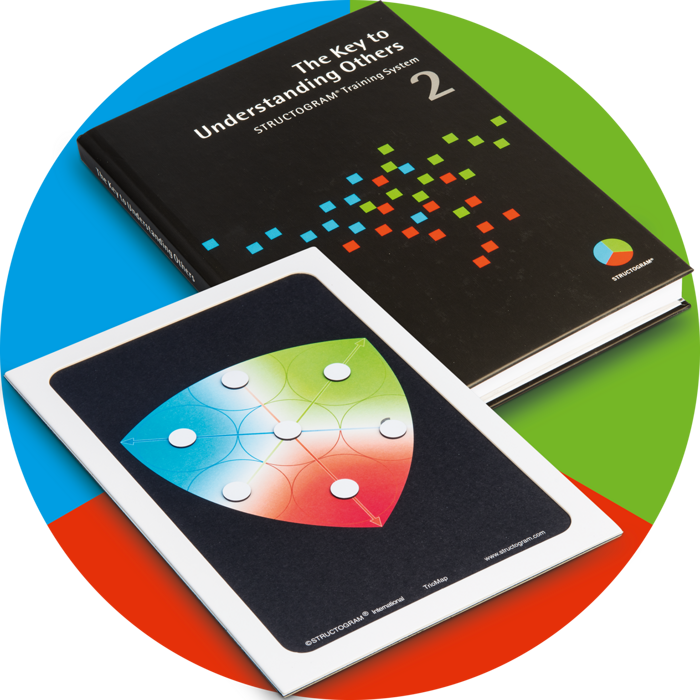
Every person is unique. It is impossible to capture every single one of the countless signals that people send out. In order to evaluate and understand these diverse signals and idiosyncrasies, our brain needs criteria as a framework to help us organize these impressions. The TRIOGRAM is a kind of map for quickly and reliably structuring the idiosyncrasies of other people. During training, it is anchored in long-term memory as an internal image.
In Triogram training, participants learn to recognize the biostructure of other people through systematic observation and to “locate” it in the Triogram. Knowledge of one’s own biostructure serves as the basis for this.
Those who recognize the biostructure of other people become more sensitive to their behavior, can better understand people in their individuality, and thus avoid unnecessary conflicts.
STRUCTOGRAM® Training System 3
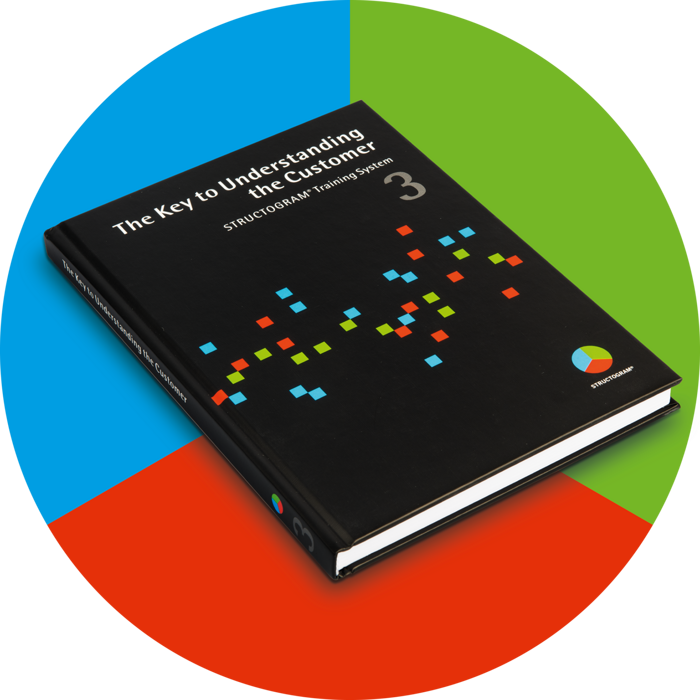
Understanding the key motivations behind different personality types is the foundation of successful communication. Managers can use this insight to determine the “right” tasks or leadership approaches. Sales representatives learn to formulate the “right” arguments for the company’s products. Applying interpersonal skills fosters a culture of trust within the company, with customers, and with other stakeholders.


People are not born as a blank slate, but carry with them an ‘evolutionary legacy’ that influences their behaviour.

Once you have found yourself, there is nothing in this world you can lose.
And once you have understood the human being within yourself, you understand all human beings.